"Moby Dick was the Da Vinci Code of Melville's time."
Yep.
And Melville, it seems, was a Unitarian.
Unitarians are Trinitarians without the trinity (father, son, holy ghost bundle). It's not the father, it's not the son, and it's not the holy ghost. It's almost Buddhist! What do Unitarians do at Xmas and Easter? Do they 'do' Holly and Lilies? I wonder...
Unitarianism is a reaction to Calvinism in the same way Buddhism is a reaction to Brahmanism. There is that nasty Michael Servetus affair for Calvinists to deal with. It was SO 12th century to behave in this way. I am not JUDGING Calvin - his sadistic actions speak louder than his feeble words. Calvin had chronic pulmonary tuberculosis. It was, in his view, predestined by god. He was not the kind of guy you would invite over for coffee - or a hot bottle of sake.
And THAT makes "Herman Melville's Religious Journey" worth reading!
Melville's mother was a Calvinist (Dutch Reformed Church). And his dad was a Unitarian.
From his writings, it was obvious that Melville was poking fun at FUNDIES.
The American Revolution was as much 'against the church' as it was 'against royalty.' And this brief book describes the turf of Melville's day.
*Five United States presidents were Unitarians
Monday, May 13, 2013
Herman Melville's Religious Journey
"Moby Dick was the Da Vinci Code of Melville's time."
Yep.
And Melville, it seems, was a Unitarian.
Unitarians are Trinitarians without the trinity (father, son, holy ghost bundle). It's not the father, it's not the son, and it's not the holy ghost. It's almost Buddhist! What do Unitarians do at Xmas and Easter? Do they 'do' Holly and Lilies? I wonder...
Unitarianism is a reaction to Calvinism in the same way Buddhism is a reaction to Brahmanism. There is that nasty Michael Servetus affair for Calvinists to deal with. It was SO 12th century to behave in this way. I am not JUDGING Calvin - his sadistic actions speak louder than his feeble words. Calvin had chronic pulmonary tuberculosis. It was, in his view, predestined by god. He was not the kind of guy you would invite over for coffee - or a hot bottle of sake.
And THAT makes "Herman Melville's Religious Journey" worth reading!
Melville's mother was a Calvinist (Dutch Reformed Church). And his dad was a Unitarian.
From his writings, it was obvious that Melville was poking fun at FUNDIES.
The American Revolution was as much 'against the church' as it was 'against royalty.' And this brief book describes the turf of Melville's day.
*Five United States presidents were Unitarians
Monday, April 29, 2013
Mother, may I?
When we were kids, we played "Mother, may I?"
Normally, people grow up and get over that game. Some don't.
It is not confined to the West.
East and West, "Mother, may I" is a persistent game wherein personal power is abdicated to religion.
It's not only silly, it's dangerous!
Hitler was the child of Catholic parents, attended Catholic schools, and considered becoming a priest.
But Hitler wasn't all bad. He painted and he liked dogs. I like dogs too but question he choice of mothers.
Madonna and Child, Painting by Adolf Hitler.
It is not confined to the West.
East and West, "Mother, may I" is a persistent game wherein personal power is abdicated to religion.
It's not only silly, it's dangerous!
Hitler was the child of Catholic parents, attended Catholic schools, and considered becoming a priest.
But Hitler wasn't all bad. He painted and he liked dogs. I like dogs too but question he choice of mothers.
Madonna and Child, Painting by Adolf Hitler.
Saturday, November 17, 2012
To ascend is to fall...
The knell of the bells at the Gion temple
Echoes the impermanence of all things.
The colour of the flowers on its double-trunked tree
Reveals the truth that to flourish is to fall.
He who is proud is not so for long,
Like a passing dream on a night in spring.
He who is brave is finally destroyed,
To be no more than dust before the wind.
source
See also: Heiki Monogatari
祇園精舎の鐘の聲、
諸行無常の響あり。
娑羅雙樹の花の色、
盛者必衰のことわりをあらはす。
おごれる人も久しからず、
唯春の夜の夢のごとし。
たけき者も遂にほろびぬ、
偏に風の前の塵に同じ。
Gion shouja no kane no koe
shogyou mujou no hibiki ari.
Shara souju no hana no iro
jousha hissui no kotowari o arawasu.
Ogoreru hito mo hisashikarazu,
Tada haru no yo no yume no gotoshi.
Takeki mono mo tsui ni horobinu.
Hitoe ni kaze no mae no chiri ni onaji.
“The sound of the Gion Shoja temple bells
echoes the impermanence of all things;
the color of the sala flowers*
reveals the truth that to flourish is to fall.
The proud do not endure,
like a passing dream on a night in spring;
the mighty fall at last,
to be no more than dust before the wind.”
― Helen Craig McCullough, The Tale of the Heike
The 2nd Abbot of SFZC Zentatsu Richard Baker apologized for a bump in the road - some 30 years past. SFZC survived. And so did Richard Baker.
http://50years.sfzc.org/weekend-dharma-talks
And so did you and I or I would not be writing it and you would not be reading it.
*Shorea robusta - not to be confused with the cannonball tree
Tuesday, June 19, 2012
Puzzle
The Ten Ox Herding Pictures
From The Manual of Zen Buddhism,
By Shubun (15th Century). With adjustments to the D.T. Suzuki translation.
1. Undisciplined
With his horns fiercely projected in the air, the beast snorts. Madly running over mountain paths, farther and farther he goes astray! A dark cloud spreads across the entrance of the valley. And who knows how many of the fine fresh herbs he has trampled carelessly under his wild hoofs?
2. Discipline Begun
Now in possession of a straw rope, I pass it through his nose. Once he makes a frantic attempt to run away, but he is severely whipped. The beast resists training with all the power he has in his wild and ungoverned nature. But the rustic ox herder maintains a steady pull on the tether and is ever-ready to correct with his whip.
3. In the Harness
Gradually, after getting into the harness, the beast is now content to be led by the nose. Crossing a stream or walking along a mountain path, he follows every step of the leader; The leader holds the rope firmly in his hand never letting it go,
All day long he is on the alert - almost unconscious of fatigue.
4. Faced Around
After many long days of training the result begins to show and the beast's faced is turned; A nature once so wild and ungoverned is finally broken, he has become gentler; But the tender has not yet given him his full confidence, He still maintains his straw rope with which the ox is now tied to a tree.
Face turned after long days of training... A nature once wild becomes governed...
5. Tamed
Under the green willow tree and by the ancient mountain stream, The ox is set at liberty to pursue his own pleasures; At the eventide when a grey mist descends on the pasture, The boy winds his homeward way with the animal quietly following.
6. Unimpeded
On the verdant field the beast contentedly lies idling his time away, No whip is needed now, nor any kind of restraint; The boy too sits leisurely under the pine tree, Playing a tune of peace, overflowing with joy.
7. Laissez Faire
The spring stream in the evening sun flows languidly along the willow-lined bank,
In the hazy atmosphere the meadow grass is seen growing thick; When hungry he grazes, when thirsty he quaffs, as time sweetly slides, While the boy on the rock dozes for hours not noticing anything that goes on about him.
8. All Forgotten
The beast is all in white now and surrounded by the white clouds, The man is perfectly at his ease and care-free, so is his companion; The white clouds penetrated by the moon-light cast their white shadows below, The white clouds and the bright moon-light-each following its course of movement.
9. The Solitary Moon
Nowhere is the beast, and the oxherd is master of his time, He is a solitary cloud wafting lightly along the mountain peaks; Clapping his hands he sings joyfully in the moon-light; But remember, a last wall is still left barring his homeward walk.
10. Both Vanished
Both the man and the animal have disappeared, no traces are left, The bright moon-light is empty and shadowless with all the ten-thousand objects in it;
If anyone should ask the meaning of this, Behold the lilies of the field and its fresh sweet-scented verdure.
Both Zen Circles allude to the moon in picture 10 above.
But the message, I was told, was not in the pictures, but in the intervals between the pictures.
The intervals?
I was, for 50 years, puzzled by this statement.
The interval?
The interval?
The interval?
The interval?
The interval?
Bardo!
Bardo!
It is Bardo!
So now I see each picture as a separate and distinct incarnation of the monk on his path through the many cycles of birth-death. With each turning of the wheel he makes incremental progress toward nirbana - with small but significant gains to show for each incarnation.
And, in the due course of time, he achieves oneness with all as represented by picture 10 and the Zen Circle. There is no shadow in the 'moon' because it is not the moon that is represented - it is nirbana.
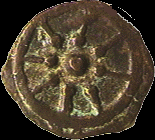
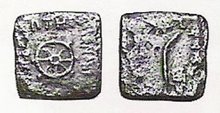
There is another detail worthy of notice - the big dipper in picture 9. The "be well" or Svasti (seen below) is symbolic of the big dipper rotating in the northern sky. This is an allegorical representation of the turning of the wheel of birth-death cycles.
Addendum:
I was asked, in an unpublished comment, how a Buddhist Text could have an Ox Herder whipping an ox. That distinction between Ox Herder and Ox is purely artificial. The Ox is the wild and ungovernable characteristic of the herder (the animal within the man). When the "ox" is completely tamed (the passions deemed governable), he is no more - as in picture 9. But there remains one more barrier - the sense of self - between the boy/man/monk and his 'home.' When that self has dissipated then nothing remains - except nirbana (the shadowless 'moon.') One could say that Zen is also: “A system of morality, veiled in secrecy, and illustrated by symbols.”
D.T. Suzuki
source
"Zen psychology: Daisetz Suzuki remembered
More than any other Eastern thinker in the 20th century, Suzuki catalyzed the rise of humanistic psychology, which has spurred today's interest in spirituality and well-being"
Thursday, May 3, 2012
Downstream Buddhism
Anyone that thinks they have the slightest grasp of Japanese Buddhism needs to read this book. Go for the used paperback unless you want an unmarked pristine copy.
The various and sundry schools - or sects - of Japanese Buddhism did not spring forth from the head of the Buddha. These divisions were products of the times and places in which they emerged.
I will not spoil the book by describing it to you in any detail. Suffice to say Japanese Buddhism is sufficiently corrupted by power, politics, nobility, and (in some cases) stupidity. How, when, and where this happened is almost an aside. But this scholarly treatment of the evolutions of religions is well worth the read.
To paraphrase the Bard: "Get thee to a bookstore, quick!"
More food for thought...
Subscribe to:
Posts (Atom)