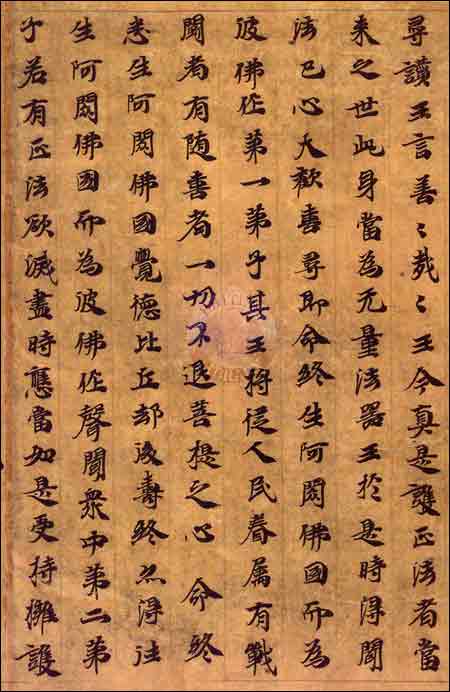
The Maha-Prajna-Paramita-Hridaya Sutra
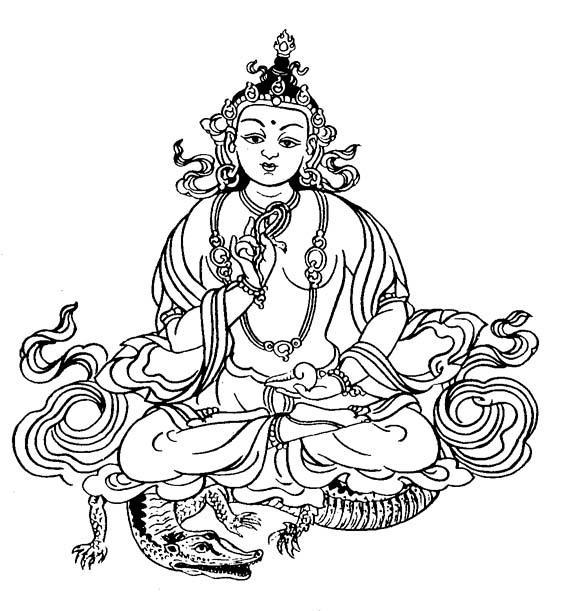
This have I heard, at one time the Buddha - with many Bodhisattvas and a company of Bhikshus - was staying at Rajagaha on Mt. Gridharakuta. The Buddha was sitting apart absorbed in Samadhi. The Ven. Sariputra, influenced by the Buddha, spoke thus to the Noble Bodhisattva Avalokitesvara:
"If a son or daughter wishes to study Prajnaparamita (perfect wisdom), how is he to do so ?
The noble Avalokitesvara replied to the Venerable Sariputra:
"If a son or daughter wishes to study Prajnaparamita, he must first expel the idea of ego-selfness. Let him think thus: Personality? What is that? Is it an enduring entity? Or is it an element that will pass away? Personality is five grasping aggregates: form, sensation perception, discrimination, consciousness, all of which are by nature empty of substance.
Because form is emptiness, emptiness is not different from form. Also, sensation is emptiness, emptiness is not different from sensation. Indeed, emptiness is sensation.
Also, perception is emptiness, emptiness not different from perception. Indeed, emptiness is sensation.
Also, discrimination is emptiness, emptiness is not different from discrimination. Indeed, emptiness is discrimination.
Also consciousness is emptiness, emptiness is not different from consciousness. Indeed, emptiness is consciousness.
Thus, O Sariputra, all things having the nature of emptiness have no beginning and no ending.
They are neither faultless nor faulted; they are neither perfect nor imperfect.
In emptiness there is no form, no sensation, no perception, no discrimination, no consciousness.
There is no eye, no ear, no nose, no tongue; no sensitiveness to contact, no mind.
There is no sight, no sound, no smell, no taste, no touch, no mental process, no object, no knowledge, no ignorance.
There is no destruction of objects, there is no cessation of knowledge, no cessation of ignorance.
There is no Noble Four Truths: no pain, no cause of pain, no cessation of pain, no Noble Path leading to the cessation of pain.
There is no decay and no death, and no destruction of the notion of decay and death.
There is no knowledge of Nirvana, there is no obtaining of Nirvana.
Why is there no obtaining of Nirvana? Because Nirvana is the realm of nothingness.
If the ego-soul of personality was an enduring entity it could not obtain Nirvana.
It is only because personality is made up of elements that pass away, that personality may attain Nirvana.
So long as man is seeking highest perfect Wisdom, he is still abiding in the realm of consciousness.
If he is to realize Nirvana, he must pass beyond consciousness.
In highest samadhi (meditation), having transcended consciousness, he has passed beyond discrimination and knowledge, beyond the reach of change or fear; he is already enjoying Nirvana.
The understanding of this and the acceptance of this is Prajnaparamita.
All the Buddhas of the past, present and future who attain samadhi, (Budh) awake to find themselves realizing Prajnaparamita.
Therefore, O Sariputra, anyone seeking self-realization of Prajnaparamita, the Transcendent Truth, the Truth that spans the troubled ocean of life and death: that safely carries all seekers to the undiscovered country, from whose bourn* no traveler returns must listen to the Mantra, the Great, Mysterious Mantra: O'om gate, gate, paragate, parasamgate, bodhi, svah!
Gone, gone to that other country; safely passed to that other country, wake up there, with a cheer."
O Prajnaparamita !
So mote it be.
*There are two derivatives of bourn. Bourn from old French means "boundary" which is often the attributed meaning of bourn in Shakespear. However, the old English meaning is "river".
Country is also variously translated into 'realm' or 'shore.' All that is being communicated on and about this point is the passage from here to not here or perception to no perception - or specifically from form to emptiness. (There is no distinction among any of them.)
Other readings: one, two, three.
Monday, August 9, 2010

Tuesday, August 3, 2010
Sunday, August 1, 2010
Buddsism as Moral Science
Consider the third of the Five Precepts:
Kamesu micchacara veramani sikkhapadam samadiyami
I will train to refrain from wrong-doing with respect to sensuality.
To recycle from 2 posts ago:
The Latin word mōrālis relates to individual manners. Moral virtue is the middle way between excess (hedonism) and deficiency (complete deprivation). Being moral is conforming to a personal value system and having consistency in your decisions based on a mechanism with foundations in responsibility and balance.
Kamesu micchacara veramani sikkhapadam samadiyami
I will train to refrain from wrong-doing with respect to sensuality.
To recycle from 2 posts ago:
The Latin word mōrālis relates to individual manners. Moral virtue is the middle way between excess (hedonism) and deficiency (complete deprivation). Being moral is conforming to a personal value system and having consistency in your decisions based on a mechanism with foundations in responsibility and balance.
Sunday, July 25, 2010
Cut from a different bolt of cloth...
A Kesa is a symbolic robe made from discarded sheets once used to wrap bodies before cremation. These were found along the banks of the Ganges River, where the dead were cremated and the soiled sheets discarded. A kesa made in this way represents the transformation from the lowest of fabrics to the most holy (sacred). It's a kind of spiritual alchemy for the cloth.
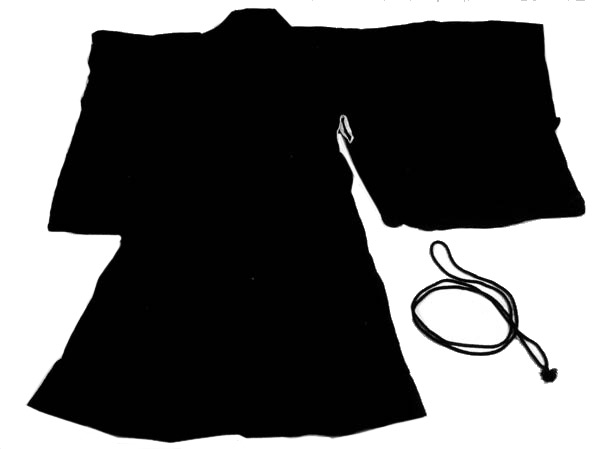
A Kolomo is a wide sleeved monk's robe. Traditionally the kolomo is hand made from the cheapest material - hemp cloth - that has been discarded. The kolomo is very personal to the monk since each monk stitched the patches of hemp cloth (a coat of many colors) together and died it in indigo (indigo aigi or kasane aigi).
"The Joman period (before 300 A.D.) had kimono which were made of hemp and were loosely fastened with no distinction between male and female clothing."
Kasane aigi is the inner layer of a kimono set, of two or more pieces, worn traditionally in Japan. The practice of wearing aigi, however, ceased with the criminalization of hemp farming following WWII. Hemp Kasane aigi last for centuries and they become softer as the centuries pass.
The Rakusu is a small kolomo/kesa worn during work periods. The rakusu may also be worn for zazen.
Words often have two meanings: kesa is Sanskrit for hair.
And, if you don't like it, you can kesa my asu.
Japanese word Asu means tomorrow.
A Kolomo is a wide sleeved monk's robe. Traditionally the kolomo is hand made from the cheapest material - hemp cloth - that has been discarded. The kolomo is very personal to the monk since each monk stitched the patches of hemp cloth (a coat of many colors) together and died it in indigo (indigo aigi or kasane aigi).
"The Joman period (before 300 A.D.) had kimono which were made of hemp and were loosely fastened with no distinction between male and female clothing."
Kasane aigi is the inner layer of a kimono set, of two or more pieces, worn traditionally in Japan. The practice of wearing aigi, however, ceased with the criminalization of hemp farming following WWII. Hemp Kasane aigi last for centuries and they become softer as the centuries pass.
The Rakusu is a small kolomo/kesa worn during work periods. The rakusu may also be worn for zazen.
Words often have two meanings: kesa is Sanskrit for hair.
And, if you don't like it, you can kesa my asu.
Japanese word Asu means tomorrow.
Friday, July 23, 2010
From Deva to Devil to Jesus
When the Levitican Law Cult was demonizing a Deva of India they could not have known that, in later years, Byzantium would bring Mithras back as Jesus.
But Karma works like that - in ironical metaphors. And, as long as you keep a liberal education out of the classroom, no one is the wiser.
Mithra (or Mitra) is often paired with the deity Varuna.
Kipling was a fan of Mithras.
So, let us first demonize Mithras:
Isaiah 14:12 (KJV): “How art thou fallen from heaven, O Lucifer, son of the morning! how art thou cut down to the ground, which didst weaken the nations!”
Lucifer is not a proper name, but is merely a Latin word for ‘morning star.’ And the morning star being refered to is the planet Venus. Lucifer means light-bringer, from Latin lux "light" + ferre "to bring." The word Lucifer is found in only once in the Bible -- Isaiah 14:12!
And then, let's bring him back:
Rev 22:17: “I am the root and the offspring of David, and the bright and morning star.” (David here refers to the planet Mercury* or 'house of DwD' delta invert delta).
Rev. 22:16 and 2 Peter 1:19 clearly state that Christ Jesus (oiled fish) Himself is the “morning star” and the “day star.” Both the NIV and the RSV attribute the Lord’s names to the Hindu Deva Mithra! But, having borrowed it from the Zoroastrians, it makes sense - and dollars too.
There is even a conspiracy theory drifting (as a fart in the wind).
There is much to be hidden from the profoundly ignorant lest it destroy them altogether - and diminish the magnitude of cash flow as the offering plate passes.
There are two morning stars (planets) Mercury and Venus. Mercury's transits scribe out a hexagram. Venus' transits scribe out a pentagram. It's just plotting planets - astrology. Vedanga Jyotisha is a 13th c. BCE Hindu document which gives the methods of calculating the two shapes. Even that ancient indigenous work refers to Surya (Venus) and Chandra (Mercury).
Mercury (the house of DwD - Hindu Chandra) is closest to the heavenly father - deus pter (the sun) later corrupted into Zeus and Jupiter. Surya, Mitra, Lucifer, Jesus, or the ‘morning star’ is Venus - not a star (which generates light) but a planet (which reflects light).
But Karma works like that - in ironical metaphors. And, as long as you keep a liberal education out of the classroom, no one is the wiser.
Mithra (or Mitra) is often paired with the deity Varuna.
Kipling was a fan of Mithras.
So, let us first demonize Mithras:
Isaiah 14:12 (KJV): “How art thou fallen from heaven, O Lucifer, son of the morning! how art thou cut down to the ground, which didst weaken the nations!”
Lucifer is not a proper name, but is merely a Latin word for ‘morning star.’ And the morning star being refered to is the planet Venus. Lucifer means light-bringer, from Latin lux "light" + ferre "to bring." The word Lucifer is found in only once in the Bible -- Isaiah 14:12!
And then, let's bring him back:
Rev 22:17: “I am the root and the offspring of David, and the bright and morning star.” (David here refers to the planet Mercury* or 'house of DwD' delta invert delta).
Rev. 22:16 and 2 Peter 1:19 clearly state that Christ Jesus (oiled fish) Himself is the “morning star” and the “day star.” Both the NIV and the RSV attribute the Lord’s names to the Hindu Deva Mithra! But, having borrowed it from the Zoroastrians, it makes sense - and dollars too.
There is even a conspiracy theory drifting (as a fart in the wind).
There is much to be hidden from the profoundly ignorant lest it destroy them altogether - and diminish the magnitude of cash flow as the offering plate passes.
There are two morning stars (planets) Mercury and Venus. Mercury's transits scribe out a hexagram. Venus' transits scribe out a pentagram. It's just plotting planets - astrology. Vedanga Jyotisha is a 13th c. BCE Hindu document which gives the methods of calculating the two shapes. Even that ancient indigenous work refers to Surya (Venus) and Chandra (Mercury).
Mercury (the house of DwD - Hindu Chandra) is closest to the heavenly father - deus pter (the sun) later corrupted into Zeus and Jupiter. Surya, Mitra, Lucifer, Jesus, or the ‘morning star’ is Venus - not a star (which generates light) but a planet (which reflects light).
Subscribe to:
Posts (Atom)