In discussing the migration of Soto Zen Buddhism from Japan to San Francisco, I mentioned that Zen came from Korea (or China) and was already transformed by time and culture from the ancient Buddhism of Nepal.
That is to say, we need not worry that Japanese Zen is "pure" and that San Francisco Zen is currupted. Such distinctions add little value to the conversation. What matters, as students, is taking ownership of our OWN research and understanding of the Dharma (or recitations of the Buddha).
San Francisco Zen is no longer Japanese in the same way that not even the Japanese are Japanese anymore.
"A decade ago a new generation emerged in Japan: the shinjinrui, the “new human species.” The term described Japanese who seemed to be a people apart."
I have previously commented about this complex subject of Buddhism crossing cultural boundaries HERE.
So, where do we begin?
One of many places is HERE.
The idea is to translate the archaic Nepali to modern English while maintaining cognitive equivalents.
In other words, where the ancient idea might have been: "While he sat under the tree of enlightenment a sense of understanding emerged..." a rendering of "While seated beneath the Ficus Religiosa, a light turned on in the head of Siddharta Shakyamuni Gautama."
It is NOT the Buddha's head that we should worry about!
Buddha was an early notorious psychologist. He though deeply about the human condition AND he thought deeply about thinking about the human condition. Psychologists call this metacognition - thinking about thinking (or questioning our own biased perceptions).
"Do not go by reports (repeated hearing), by legends, by traditions, by rumours, by scriptures, by surmise, conjecture and axioms, by inference and analogies, by agreement through pondering views, by specious reasoning or bias toward a notion because it has been pondered over, by another's seeming ability, or by the thought, 'This monk (contemplative) is our teacher."
However, Kalamas, when you yourselves know: "Such and such things are unskilful (bad); blameworthy; criticized by the wise; and if adopted and carried out lead to harm and ill and suffering," you need to abandon them."
In Pali, Buddha's reply is recorded thus:
Ma anussavena.
Do not believe something just because it has been passed along and retold for many generations. [Simpler: Do not be led by what you are told.]
Ma paramparaya.
Do not believe something merely because it has become a traditional practice. [Do not be led by whatever has been handed down from past generations.]
Ma itikiraya.
Do not believe something simply because it is well-known everywhere. [Do not be led by hearsay or common opinion.]
Ma Pitakasampadanena.
Do not believe something just because it is cited in a text. [Do not be led by what the scriptures say]
Ma takkahetu.
Do not believe something solely on the grounds of logical reasoning. [Do not be led by mere logic.]
Ma nayahetu.
Do not believe something merely because it accords with your philosophy. [Do not be led by mere deduction or inference.]
Ma akaraparivitakkena.
Do not believe something because it appeals to "common sense". [Do not be led by considering only outward appearance.]
Ma ditthinijjhanakkhantiya.
Do not believe something just because you like the idea. [Do not be led by preconceived notions (and the theory reflected as an approval)]
Ma bhabbarupataya.
Do not believe something because the speaker seems trustworthy. [Do not be led by what seems acceptable; do not be led by what some seeming believable one says.]
Ma samano no garu ti.
Do not believe something thinking, "This is what our teacher says". [Do not be led by what your teacher tells you is so.]
Half of the people on this planet have a BELOW AVERAGE I.Q.!
(Hint: what does average mean?)
Need I even remind you of who Palin is???
"The People Don't Elect U.S. Presidents, God Does"
Upon being asked by James Dobson if the McCain ticket's precipitous slide in the polls gets her down:
... [it] strengthens my faith, because I'm going to know, at the end of the day, putting this in God's hands, that the right thing for America will be done at the end of the day on Nov. 4. So I'm not discouraged at all.
... and I can feel it too, Dr. Dobson. I can feel the power of prayer, and that strength that is provided through our prayer warriors across this nation.
Ah yes, the always helpful "prayer warriors," whose appeals to the Almighty actually count for more than the average American citizen's vote. Apparently the next president of the United States will be handpicked by God.
Except Barak Obama was NOT (in the nutty Right thinking) god's choice.
Well. perhaps not one, among the many gods, made a choice!
"It's a young Earth, after all."
Or is it?
In a developing story from Kentucky, the Creation Museum is running out of money due to declining attendance, bringing their “Ark Encounter” project to a stand-still because of a lack of funding.“At the end of the day young earth creationism requires you to throw out pretty much everything we know about science,” says Josh Rosenau of the National Center for Science Education.
“We would just need one piece of evidence...”
“We would need the fossil that swam from one layer to another,
we would need evidence that the universe is not expanding,
we would need evidence that the stars appear to be far away but they’re not.
We would need evidence that rock layers can somehow form in 4000 years…
We would need evidence you can reset atomic clocks and keep neutrons from becoming protons.”
We would need a significantly higher I.Q. over on the Right.
I have known about this controversy for several years but chose not to comment - until now.
In high school (the 1960s), some of us read (what I now consider a sacred scripture) "The Birds."The Birds (Greek: Ὄρνιθες Ornithes) is a comedy by the Ancient Greek playwright Aristophanes.
The play is posted HERE and includes a link to a free download. Read it, if you can read. Meditate upon it, if you can meditate.
Scarabs were popular amulets in ancient Egypt. They survive in large numbers and, through their inscriptions and typology, they are an important source of information for archeologists and historians of the Ancient world. They also represent a significant body of ancient art.
The 419 scam explanation is HERE.
Yet, a fool is born every minute of every day (and 2/3rds of them vote for republicans).
Then the letter below (modified by me) arrived.
Talk about a complete DISCONNECT!!!
This customer service call...
HEAR IT: Comcast 'embarrassed' by employee who resists customer's effort to cancel service.
Technology journalist Ryan Block posted an 8-minute clip of the customer service representative continuously trying to ask him why he wants to disconnect and trying to talk him out of it. The company apologized to Block and said it would work to make changes.
https://soundcloud.com/ryan-block-10
How much a month do you donate to the wealthiest of the wealthiest people on the planet?
Cable TV, SATELLITE TV, and most other recurring (e.g. monthly) charges are underwriting the very very rich.
A JERUSALEM Antenna (yes, that IS the name of the technology) will connect 70% of the HDTVs in the USA to the local stations. The above antenna costs between $12 and $20. I get 41 free over-the-air channels in the San Francisco Bay Area.
And I rarely watch even one of them.
Cable is $100+ each and every month - no matter how you slice it.
Satellite TV is about the same. And not ALL HDTV is the same quality! Over-the-air may be 1920x1080x30 (for movies) or 1280x720x60 (for sports). Higher temporal resolution reduces jutter or frame-to-frame jurky-ness (not jitter).
Not all cable and Satellite channels can deliver anything like that owing to power-bandwidth products. Lower resolution requires less overall power to transmit. And power consumption is money.
By the way (here's a bright idea), check out LED light bulbs for your house. They can cut energy consumption by up to 90%. But don't buy them from billionaires!
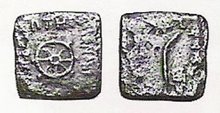
The Milanda Panna is a famous work of Buddhist literature, probably compiled in the 1st century B.C. It presents Buddhist doctrine in a dialogue between a Bactrian Greek,Menander I, who plays the 'Devil's Advocate' and a Buddhist sage, Nagasena. The introduction outlines the historical background against which the dialogues took place, indicating the meeting of two great cultures that of ancient Greece and the Buddhism of the Indus valley, which was the legacy of the great Emperor Asoka.